California: We came, we saw, we dined, we drank

Standard

IMG_1439

We are back on Whidbey after a 10-day trip to California, happy but tired.

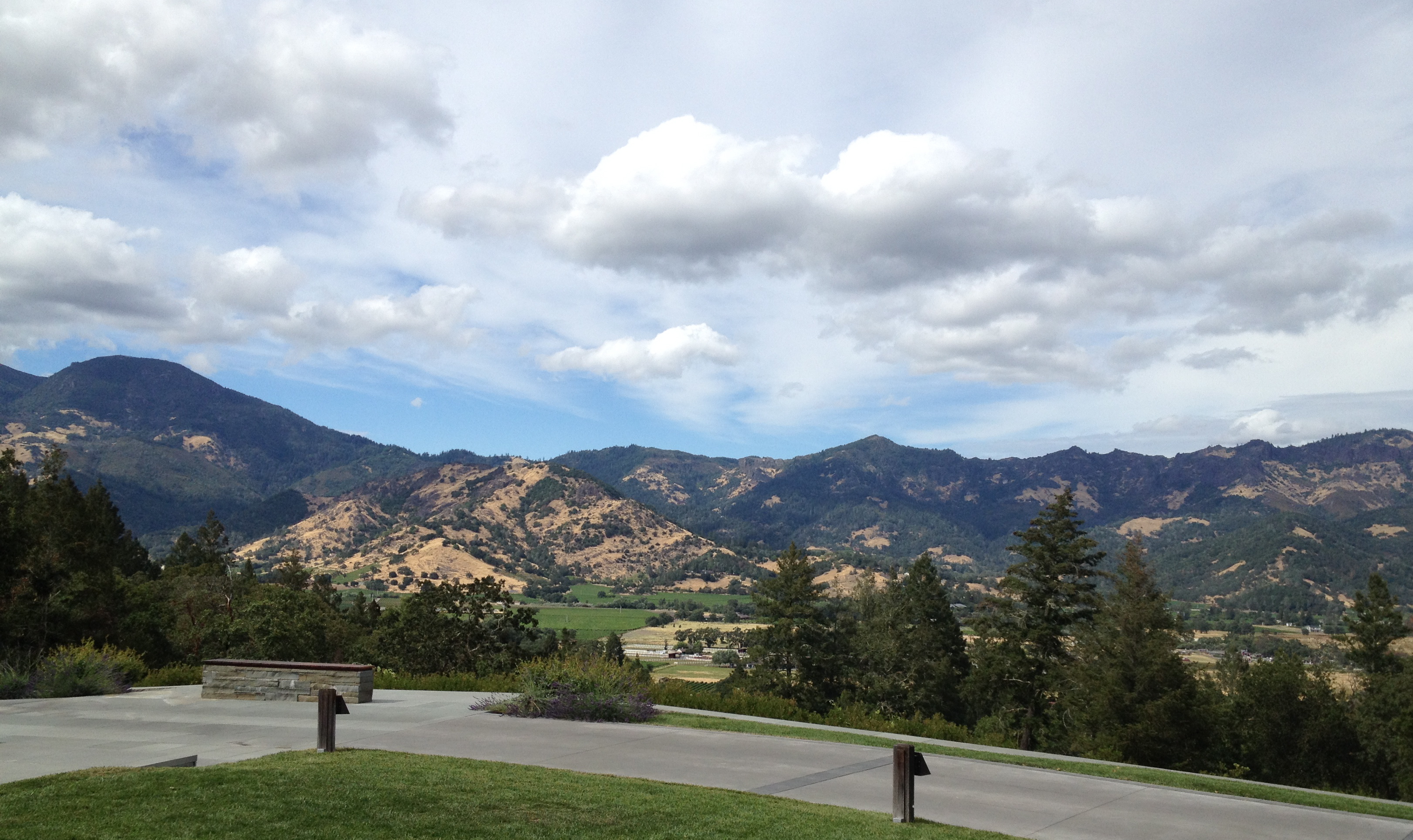
After stops in Oregon, to visit Robin’s mother, sister, and brother, and near Sacramento, to have a couple of minor repairs on the camper, we landed at Corbin and Pam Gwaltney’s beautiful house overlooking Calistoga at the north end of the Napa Valley.

Staying at Corbin and Pam’s is like staying at a fine resort where you are the only guests and the hosts are friends who are attentive to your every need. Continue reading

A tale of herbs, fish, and pot-bellied pigs

Standard

IMG_1420

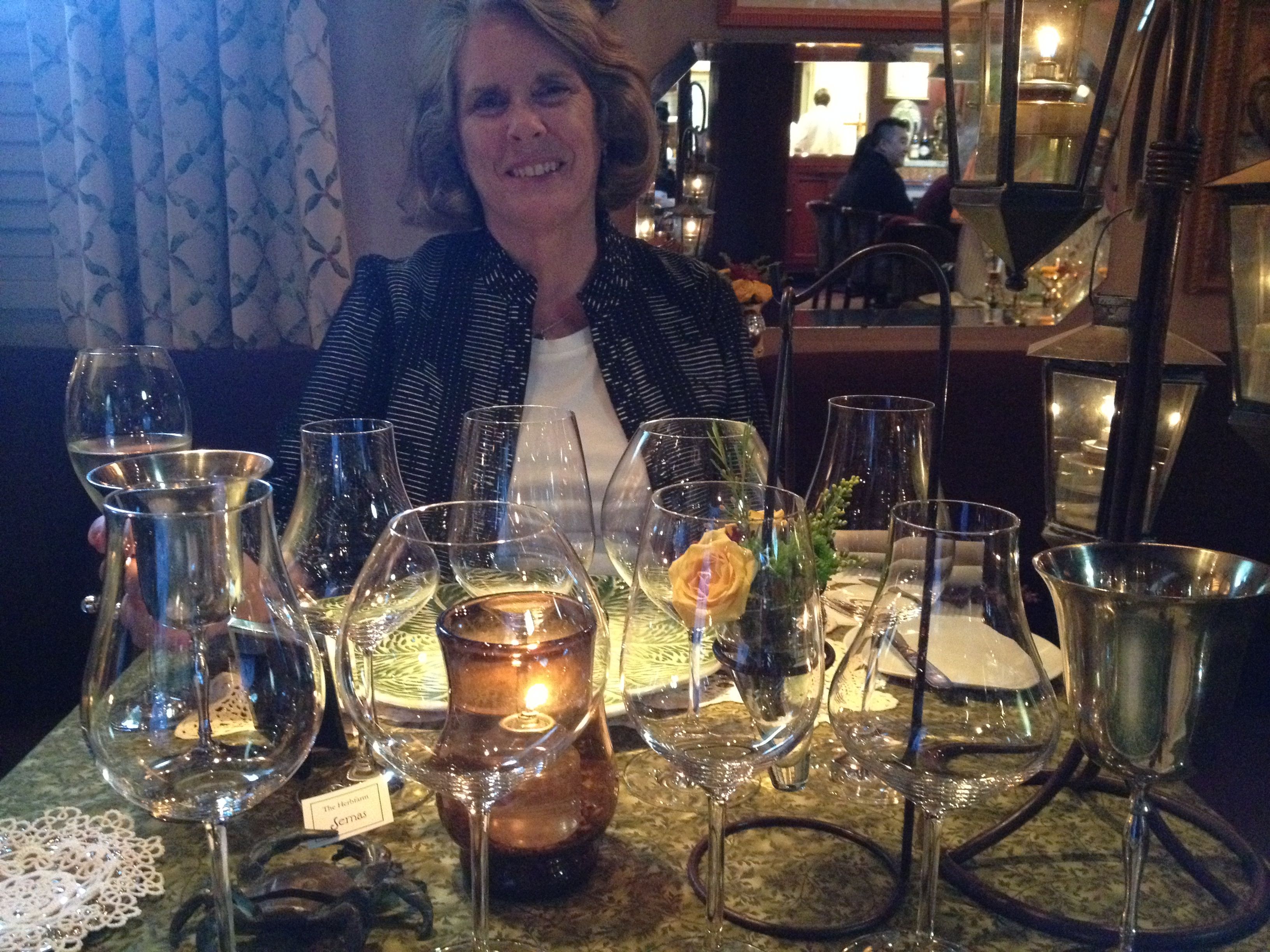
I said this wasn’t going to be a food blog, but we had a meal Saturday night that cannot pass unremarked. We celebrated Robin’s birthday with dinner at the Herbfarm in Woodinville, a town just northeast of Seattle that is home to scores of wineries.

I have eaten at a lot of high-end restaurants, including the much-lauded French Laundry in the Napa Valley, but none were like the Herbfarm, with one possible exception (more on that below).

The Herbfarm was started by a retired couple who grew herbs and gave the extras away to friends. Then they started selling the herbs, adding cooking classes, and ultimately a restaurant. The original restaurant burned down, and it moved to the current location, on the grounds of the Willows Lodge, on 2001. Continue reading

Going to the Americas

Standard

This blog has been quiet for the last month because, well, because after four months in North Carolina and 19 days on the road, we didn’t want to go anywhere.

Recently, however, we have begun to venture “over town,” which is island-speak for going to the mainland. Some islanders apparently also talk about “going to the Americas,” which seems to indicate a feeling that Whidbey is quite a bit different from mainland places like, say, Mukilteo. I learned this from an unimpeachable source: the person who cuts my hair. Barbers, in my experience, are excellent sources, better than the taxi drivers favored by many journalists. Continue reading

Back home on Whidbey

Standard

We arrived on Whidbey Island Sunday afternoon after scenic drive up from the Grand Canyon through Navajo country, western Utah, southern Idaho, and eastern Oregon and Washington. It was a great trip but we are glad to be home.

Here are the final statistics:

  • Miles traveled: 3,914
  • Days on the road: 19
  • Actual hours of driving: 71
  • States traversed: 15

We saw license plates from 48 states (all except Delaware, Rhode Island, and D.C.), 6 Canadian provinces (Ontario, Quebec, Manitoba, Saskatchewan, Alberta, and B.C.) and one Mexican state (Tamaulipas).

I think we’ll stay on the island for a while.

It really is a Grand Canyon

Standard

20140313-171023.jpg

We spent three nights at the Grand Canyon, our first-ever visit there. None of the thousands of photos of the canyon prepare you for what an amazing sight it is, or at least they didn’t prepare me.

(I didn’t blog from there because while the scenery is spectacular, the Internet connectivity is not so hot.)

I do not have words that would do justice to the canyon. If you have not seen it, go. Continue reading

Winslow, part two: a restored gem

Standard

20140308-063518.jpg

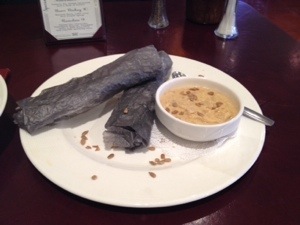
I am not one for posting photos of food I am about to eat, but this dish is interesting for reasons that transcend the gustatory.

The blue rolls are piiki, or piki, a traditional bread of the Hopi. It is difficult to make and mastering it is a rite of passage for Hopi girls. Traditionally, a girl is taught the skill by her paternal grandmother.

We had piiki at lunch in the dining room of La Posada hotel in Winslow. La Posada itself is historically significant. Continue reading

Winslow, Arizona, part one: Indian ruins

Standard

20140307-213314.jpg

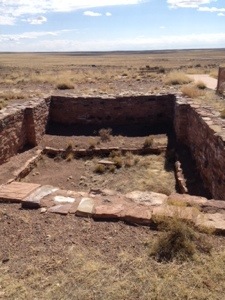
This is the remains of a kiva, a ceremonial room used by ancestors of the Hopi Indians. It’s part of a huge archeological dig in the park where we have been camping, Homolovi State Park.

Homolovi means “place of the little hills.” The precursors of the Hopi occupied this area, near the Little Colorado River, off and on for thousands of years. The four pueblos uncovered here date from the 13th and 14th centuries. The largest, known as Homolovi II, comprises 2,000 rooms.

The park was created to protect the sites, which are sacred to the Hopi and of considerable interest to archeologists. Before the park, the area was being looted by artifact hunters, and you can see several areas that were dug up by these miscreants. At one point it got so bad the looters were using a backhoe.

In 2010 the park was closed by state budget problems but reopened a year later with support from the Hopi. It is now managed cooperatively by the Hopi and the state.

If you’re ever in this part of Arizona, it’s worth a visit. Along with the archeological sites, it offers striking desert scenery, with mesas and mountains on the horizon. And the campground is nice too.

Next: Winslow, part two: a restored gem
Route 66 and the Blue Hole

Standard

After escaping single-digit temperatures in Oklahoma, we spent the last couple of nights at Santa Rosa Lake State Park in New Mexico.

The town of Santa Rosa advertises itself as “The City of Natural Lakes,” but the lake we’re on is man-made, courtesy of a dam on the Pecos River. Continue reading

Camped by a lake in Arkansas

Standard

20140302-072848.jpg

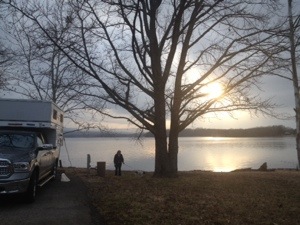
Here we are camped at Shoal Bay on Lake Dardanelle in Arkansas, west of Little Rock. A beautiful spot.

But there’s a big winter storm coming that will drive us indoors to a motel tonight in Oklahoma.